Why Trust Matters Most in the Fight against disinformation
- 29 Jul 2026
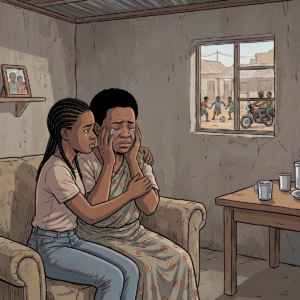

Lessons from tackling COVID vaccine misinformation, sexual & reproductive health myths and exploitative recruitment campaigns.
At the SBCC Summit earlier this year, mis- and disinformation was described as “one of the defining communication challenges of our time.” The World Economic Forum’s Global Risks Report 2026 ranks misinformation and disinformation as the second most severe risk facing the world over the next two years, behind only economic warfare between states. As digital platforms reshape how we all consume information, and trust in institutions and once-authoritative voices are drowned out, the conditions for misinformation to spread have never been more favourable.
Over the past few years Shujaaz Inc has worked to address mis- and disinformation across several areas including: COVID-19 – about the virus itself and the vaccines, about sexual and reproductive health including the use of modern contraception, and most recently, countering exploitative campaigns recruiting young Kenyans to bogus foreign job opportunities.
The issues are very different but the lessons we are learning are remarkably consistent.
First, trust matters more than facts. Second, building resilience to misinformation matters more than correcting individual falsehoods.
Trust is the real battleground
Our work on building confidence in the COVID-19 vaccine among young people in Kenya and Tanzania – delivered in partnership with the Vaccine Confidence Fund – made this unmistakable. A research summary from the project found total “vaccine hesitancy” at 58%, with most young people sitting in “wait and see” rather than outright refusal. A lack of information was rarely the core problem; most young people understood what vaccines were and what they were for. What held them back was distrust – of government, of how decisions were being made – worsened by a steady drip of misinformation moving through social networks with no trusted voice to counter it.
Misinformation didn’t win on credibility, some of the rumours circulating were wildly implausible. It won by filling a vacuum. Where trusted information was absent, misinformation simply flowed in to take its place.
We’ve seen the same pattern in our sexual and reproductive health work. Young women weren’t short on facts, they were carrying genuine fears that contraception causes infertility, changes the body, or marks a girl as “spoiled” or promiscuous. Young men weren’t confused about biology; they were navigating backlash tied to masculinity and control, with a worrying number no longer seeing pregnancy as something to share responsibility for. Neither group was weighing the science. They were weighing their trust in the different messengers, their membership of important social groups, and what their peers would think. For young women especially, the peer spaces they trusted most were exactly where the myths spread fastest.
So we didn’t lead with correction. Instead of telling girls contraceptives don’t cause infertility, we worked to normalise the idea that girls like them are already using contraception responsibly and already building the future they wanted. With young men, the shift was from threat to identity, reframing support for contraception not as a loss of control, but as part of what a modern, secure man does.
And we saw it again, more recently, in a campaign countering effort to recruit young Kenyans into sketchy overseas jobs. Formative research into the recruitment pitch found it was landing not because young people were gullible, but rather because it spoke to something real: aspiration, economic pressure, the search for a way out.
So the response wasn’t a fact-check campaign, it was a peer-distributed one: media built for the communities being targeted, alongside a matching digital push. Engagement was strong, but the number that mattered most was tone: as the campaign progressed, the share of comments, in people’s own words, actively pushing back on the fake promises, climbed above 80%.
Across all three we see that people rarely weigh information on facts alone. They filter it through trust, identity, experience and the world around them.
Resilience matters more than correction
That led us to a second lesson. If misinformation is constantly evolving, then chasing it — correcting one myth, then the next, then the next — is never going to be enough.
Our SRH work made this concrete in practice. A fact-correction might land in the moment, but it doesn’t touch the stigma or social risk a young woman is actually weighing, or the peer pressure shaping how a young man sees his own responsibility. Those pressures don’t move just because a myth has been debunked. So our focus evolved into making people less vulnerable to it in the first place.
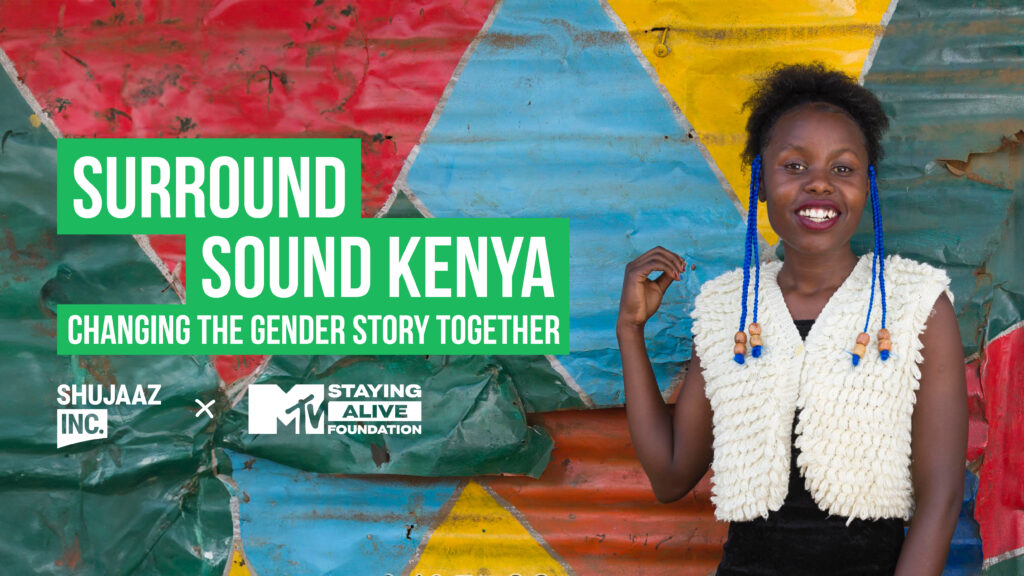
In practice, that looked like our Surround Sound Kenya programme, which doesn’t try to win an argument about SRH so much as change the whole environment around it, reaching young people through trusted youth brands, peer vibe clubs and community voices, so that accurate, judgement-free conversation becomes the norm rather than the exception. It looked like Sema na Me, our WhatsApp SRH chatbot, where a young person can ask the question they can’t ask anyone else — at two in the morning, when every clinic is closed — and be met not with a lecture but with a reply that acknowledges the fear first, and only then, with their consent, connects them to real, trusted help.
That is what building resilience actually means. It is not about having a better fact ready for every myth. It is about creating trusted, emotionally resonant spaces that strengthen people’s ability to question, weigh and critically navigate information for themselves.
Looking ahead
The misinformation surrounding vaccines is different from the myths surrounding contraception. Both are different again from exploitative job recruitment . But underneath, the challenge is the same. Trust determines how information is received. Resilience determines whether people can hold their own against the next myth, and the one after that.
If we want to counter misinformation effectively, we have to do more than correct false claims. We have to create consistent channels for trust, strengthen people’s ability to engage critically with what they encounter, and build the conditions that make informed collective decisions possible in the first place.
If you would like to learn more about our work tackling misinformation and building resilience among young people in Kenya, get in touch: Strategic.comms@shujaazinc.com
CORONAVIRUS
Read further insights from our team on how the lives of young people are being impacted by COVID-19
Explore CollectionYOU MIGHT ALSO LIKE
Publication
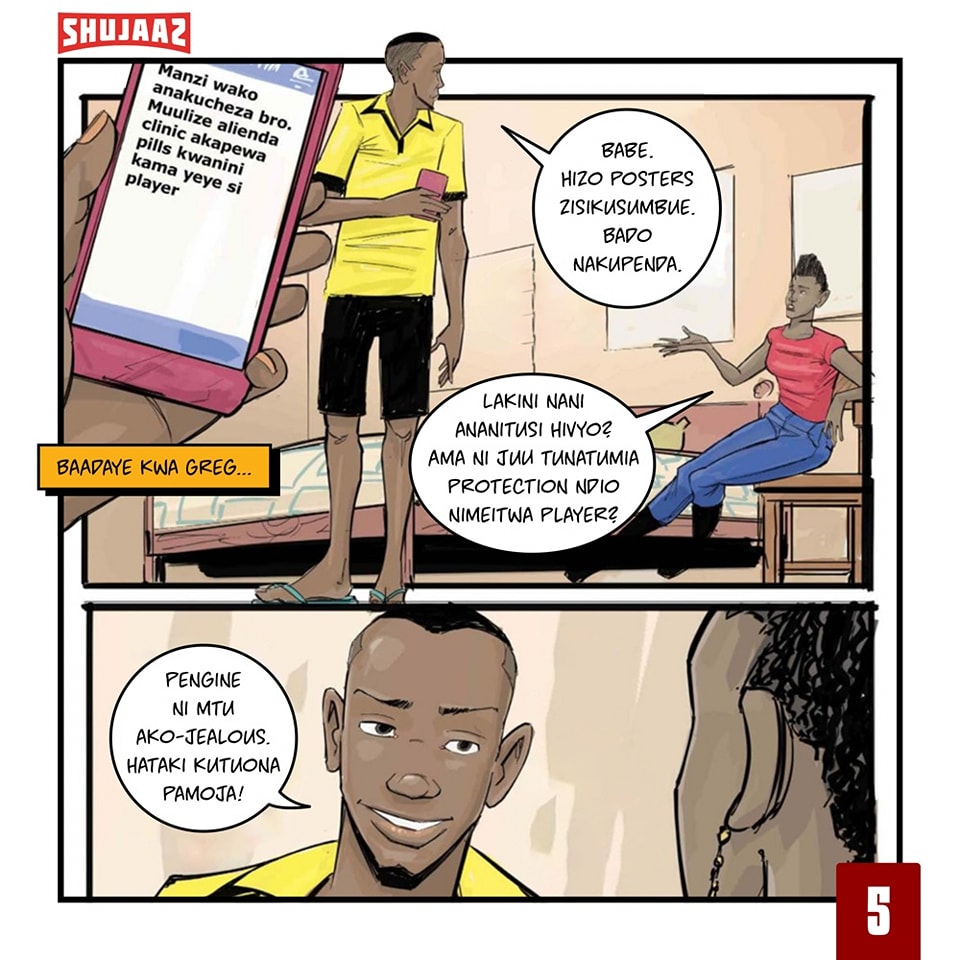
YOUNG PEOPLE ARE NOT ALL THE SAME: WHAT TAILORED VS GENERIC CONTENT TELLS US ABOUT BEHAVIOUR CHANGE
View publication